Designing a real-time translation tool for the Deaf and hard-of-hearing


Design Case Competition
1st Place
TIMELINE
February 2026 (~ 3 weeks)
THE TEAM
1 Designer
TOOLS
Figma, Perplexity, Gemini & Canva
KEY FEATURE
Accessibility & inclusivity centered design
THE OVERVIEW
The UTM Design Hub partnered with Squirl Signs — a student-founded startup — to challenge designers to build an accessible mobile interface for deaf and hard-of-hearing (DHoH) users. I joined this competition solo and owned the entire process end-to-end, including: research, design and the final pitch.
THE PROBLEM
Plenty of apps teach teach sign language. Almost none help Deaf users communicate in the moment.
I did a brief competitive audit of similar apps on the Google Play Store and realized that most tools in the Deaf community are either educational, outdated or built with hearing users as the default.
The gap: a fast, frictionless, communication tool that prioritizes the voices of non-hearing users.
This is where Squirl Signs fits the market and why they needed a mobile app design.
Solo researcher, designer and presenter
Conducted competitive analysis and translated insights into core user flows.
Iterated on sketches and wireframes ensuring my design addressed real pain points.
Designed a brand-aligned Figma prototype that prioritized accessibility for non-hearing users.
Pitched my design process and prototype in front of three industry professionals.
MY ROLE
RESEARCH & INSIGHTS
Deaf users are tired of fighting for access, bad captions, and apps that don't fit how they actually communicate
Using Perplexity Pro, I pulled insights from academic papers, competitor apps, and community videos — synthesized into a findings document by end of week one.
This insight led me to understand how Deaf users aren't all the same; many mix speech, text, and sign depending on context, and existing tools rarely account for that.
USER FLOW

CORE FOCUSES
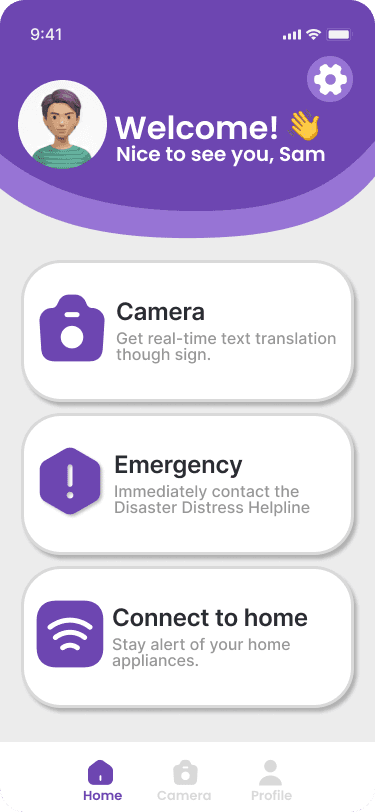
Deaf users shouldn't have to dig through menus or fight with settings just to use a basic feature. If accessibility is hidden, it isn't really accessible.
01: Accessibility shouldn't require extra effort
02:
Captions that actually work, and are easy to find
Most tools claim to prioritize accessibility, but ship captions that are inaccurate and impossible to customize.
Some users sign.
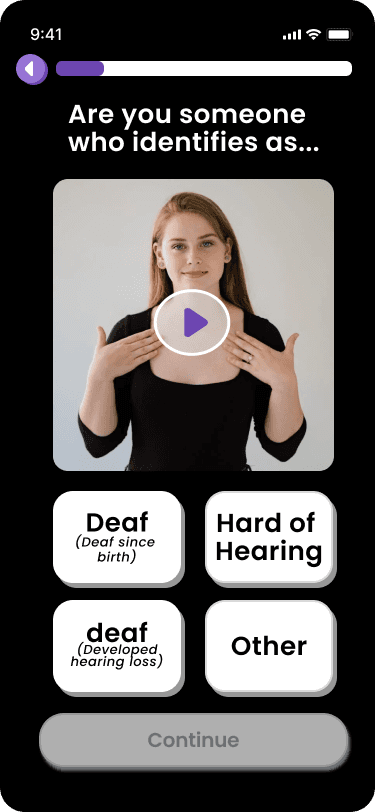
Some speak. Some do both depending on the situation. Designing a single communication mode and calling it inclusive misses the point entirely.
03:
Not everyone expresses the same way
What's the simplest version that still gave Deaf users real control?
THE QUESTION
01: Making accessibility a default
WHAT I DID
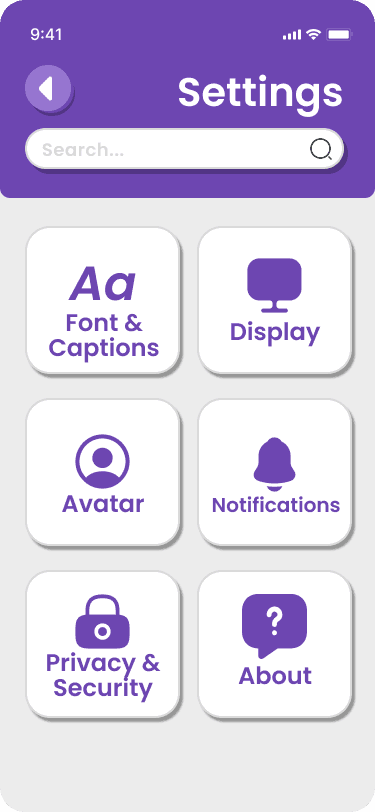
Finding the caption settings can be a headache, especially if they're buried under multiple pages. The decision to automatically keep captions on helped to reduce friction for users.
02: Controlling captions is a must
To add to the previous point, I wanted to ensure that caption control was simple, straightforward and intuitive. The 'edit captions' feature makes this process seamless.

03: Multiple ways of understanding
It was critical that users felt accommodated based on their preference of communicating and understanding. Using simple language and having videos of someone signing provided others ways users can comprehend the app.
Gained valuable feedback from industry professionals and co-founders of Squirl Sign
Gained valuable feedback from industry professionals and co-founders of Squirl Sign
Won 1st place in the competition and met some really cool people. Overall, I was grateful to have gone out of my comfort zone, do something I had never done before all on my own.
THE OUTCOME

What I'd do differently
01: Involve Deaf designers from Day 1
Nyle DiMarco, a Deaf activitist, talked about involving Deaf designers from the start is the best way to create a product designed for Deaf users. There is no amount of research that can replace the input and perspective of their reality.
02: Focusing on the bare minimum
With the time constraints of the competition and the chaos of school life, implementing all my ideas would've been impossible. I realized that if I wanted to ship something, it would require cutting off most of my 'want to implement' and focusing only on the required bits.
Media
@thed3signhub.utm on Instagram